

Simple Ways You Can Help Migrating Birds
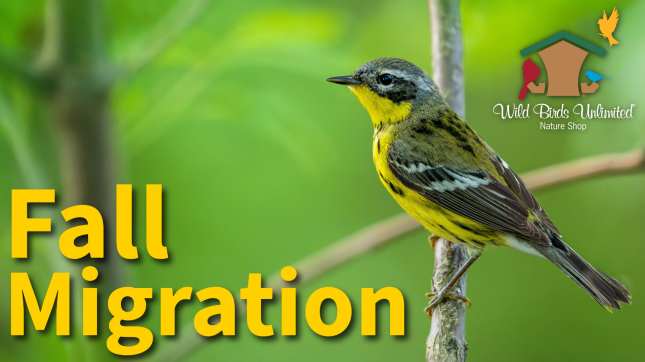
Migratory birds take flight by the hundreds of millions during the peak of fall migration, which spans September through October. Most birds travel by night, taking advantage of calmer air currents and fewer predators. These birds don't migrate because of dropping temperatures, but rather because of food availability. Unlike permanent residents such as Cardinals, Blue Jays, Chickadees, Titmice, and Woodpeckers, migratory birds have not adapted to means to survive winter in the northern hemisphere.
Here are a few ways you can support migratory birds these next couple of months:
1. Keep the skies dark
Migratory birds rely on the stars to navigate. Artificial lights can attract & confuse birds, causing them to fly off-course and become "trapped" in an unfamiliar area. This often results in a collision or succumbing to exhaustion. Keep your outdoor lights off between 11PM - 6AM to avoid disrupting migratory birds flying overhead at night.
2. Keep cats indoors
Cats kill billions of birds annually in the U.S. Even a well-fed cat will hunt because they're hard-wired to do so. You can prevent countless bird deaths by keeping your cats inside, or only allowing leashed walks outside. A catio is another great alternative to provide your kitty with outdoor time while keeping wildlife safe.
3. Plant native trees, shrubs, flowers, and grasses
Native plants will ensure residential and migratory birds have plenty of natural food. Seek out plants that are hosts to beneficial insects, and those that will provide blooms, berries, and seeds for birds to enjoy throughout the year. Native trees and shrubs will also provide birds with shelter & suitable nest sites in the spring. You can visit Native Plant Finder to discover bird-friendly plants for your landscaping.
4. Provide a moving water source.
A moving water source is a magnet for birds. If a bird is passing through and they see or hear moving water, they will almost always check it out. They need open water sources for drinking and keeping their feathers maintained for flight and proper insulation as the nights get colder.
5. Avoid insecticides
Migratory birds rely on insects for food. If you spray for bugs, you're not only greatly reducing their food supply, but also poisoning them should they consume any contaminated insects. Ticks, mosquitos, and garden invaders are annoying, but most commercial insecticides are non-selective and will do far more harm than good to your local habitat. Research non-toxic pest control options instead.
6. Offer more than seeds at your feeders
Most migratory birds aren't common at feeders because they're usually after insects, but you might be able to attract them with mealworms, fruit, suet, and Bark Butter products. If you have hummingbird feeders out, make sure you're cleaning and refilling them every couple of days to prevent the nectar from spoiling.